The Art of Relinquishment
How Tahajjud Pulled Me Out of the Deep End
by Sylla
10/1/20253 min read
There is a moment all of us face where the silent, internal collapse is worse than any external failure. For me, it came during my medical career studies. I was surrounded by people, yet sinking in a slow, quiet loneliness. No matter how hard I pushed, the scores weren't there. I bottled the anxiety in, convinced that admitting struggle was a weakness, and the crushing weight of failing my own high standard became unbearable. It was more than just a test; it was the suffocating feeling that nothing I did was truly worthwhile. I had reached the brink of collapse.
The Spiritual Turning Point
In that deepest despair, I finally turned to the one place I should have started: the night prayer. I made a conscious decision to start praying Tahajjud. It felt less like a choice and more like a desperate reflex. And it was in those quiet, early hours, reciting the powerful comfort of Surah Ad-Dhuha, that Allah literally pulled me out of the deep end. The tranquility that washed over me was immense. This peace did not come from a sudden miraculous score change; it came from the Quran itself.
The Shift: Praying to Let Go
I learned that we pray not only to ask, but to relinquish and let go. The true miracle was the emotional shift: I stopped obsessing over the outcome of my studies—which was ultimately out of my hands—and focused purely on the purity and quality of the effort I put in. This intentional effort became the most precious thing, a form of worship far exceeding the value of any grade. The anxiety dissolved because I had given the burden back to the Creator, Tawakkul.
This realization is the essence of the Islamic mindset that saved me. It taught me that failure is a feeling, not a final fact, and that our greatest moments of growth come when we finally surrender the result.
The Visible Anchor: The Dawn of Mercy
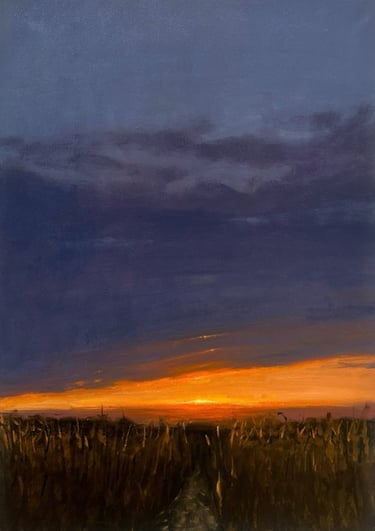
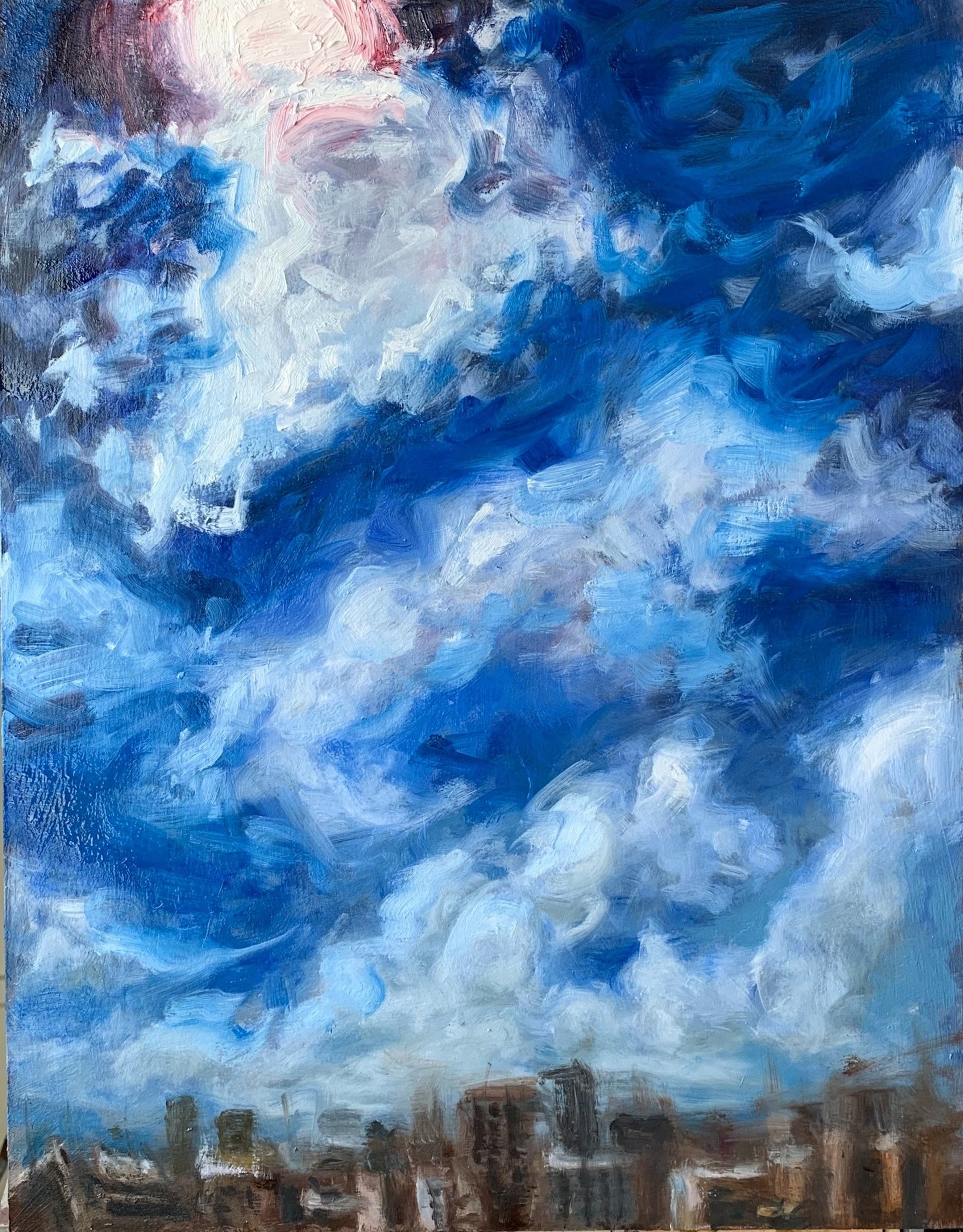
The artwork, The Dawn of Mercy, is an anchor of this profound memory. Look closely at the dark, vast sky—it is a powerful reminder of the deepest struggle. But the next day is always coming. The horizon is split by the sun, shining bright, generous, and abundant. This piece is the lasting conviction that Allah’s mercy is infinitely more giving than the sun, and His light will always break through your deepest night. Notice the initially dark, monstrous clouds now illuminated by the breaking light, displaying all of their unexpected beauty. This is the profound shift that only time and faith allow. With moments passed, we gain the perspective to see that the intense challenges become beautiful and nostalgic, not because of the pain, but because of the unwavering support we found in them. The Dawn of Mercy exists as a daily, serene reminder that "Verily, with hardship comes ease."
3. The Prophetic Model: A Lesson from Surah Maryam
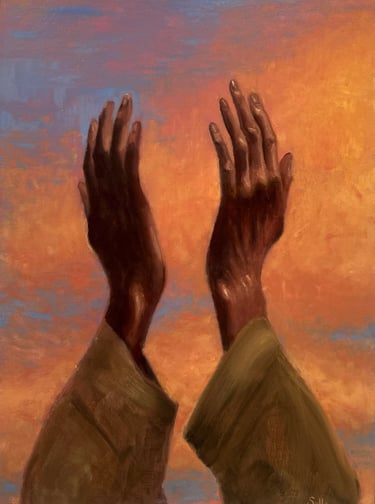
Similarly, the painting, The Du'a of Zakariya was also born of these difficult circumstances. I discovered that the ultimate model for this sincere relinquishment is the supplication of Prophet Zakariya (AS). In his moment of profound personal hardship, he did not complain to the creation, but turned only to the Creator, saying in the words of Surah Maryam: “My Lord, indeed my bones have weakened, and my head has filled with white, and never have I been in my supplication to You, my Lord, unblest.” (Quran 19:4). He perfectly articulated his pain while simultaneously confirming his perfect, unwavering trust. Similarly, the artwork, The Du'a of Zakariya, embodies such perfect submission of a human heart. The focus is on the human gesture—the hands reaching skyward. The hands themselves may look aged, perhaps even frail, embodying the weight of years and the pain of an unfulfilled, lifelong desire. This is the truth of Prophet Zakariya (AS), a man whose body was weakening, yet whose heart was stronger than ever.
Both artworks (The Du'a of Zakariya and The Dawn of Mercy) are available for sale. Let these pieces serve as a visible, daily reminder of the power of turning to Allah in your most vulnerable moments.